Explore polyimide (PI) staple fibers, their properties, wet spinning and electrospinning methods, and uses in filtration, insulation and composites.
Understanding Polyimide (PI) Staple Fibers: From Manufacturing Processes to Applications
Many people have recently shown interest in
polyimide (PI) staple fibers—what are they, where are they used, and how are they manufactured? This article provides the answers.
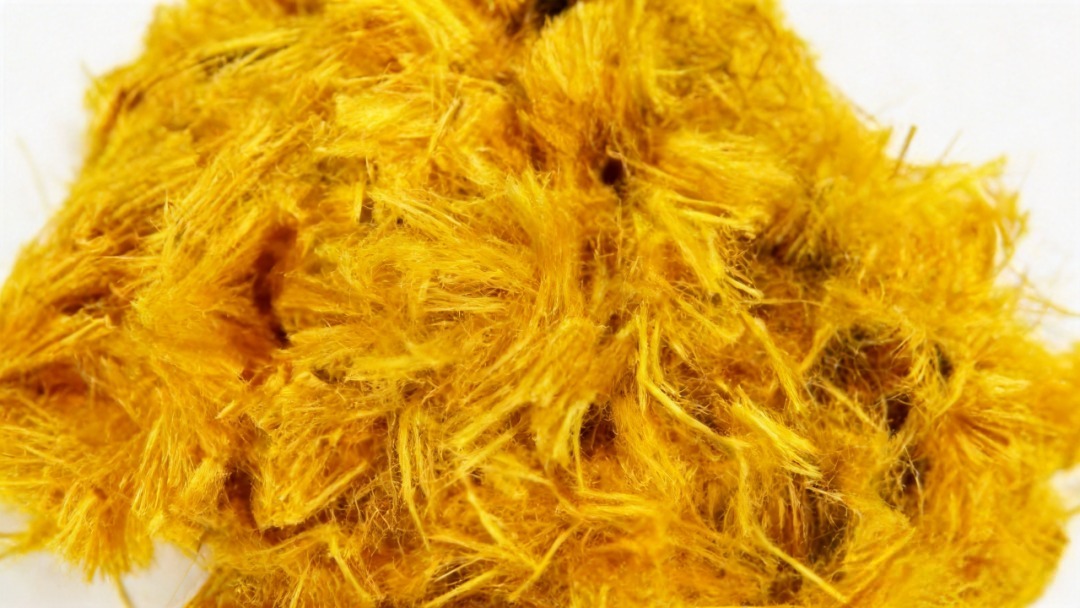
Polyimide (PI) staple fiber is a high-performance material characterized by imide rings within its molecular backbone. The rigidity of its molecular chains imparts a range of exceptional properties: it can withstand long-term operating temperatures of up to 260°C, features a thermal decomposition temperature exceeding 560°C, and boasts a Limiting Oxygen Index (LOI) as high as 38%. Furthermore, it offers a combination of high strength, high modulus, radiation resistance, and chemical corrosion resistance. Thanks to these characteristics, PI staple fibers have been successfully deployed in various industrial applications.
01. Applications of PI Staple Fibers
In practice, PI staple fibers are not typically supplied as raw fibers; instead, they are processed into end-use products through the following methods:
(1) High-Temperature Resistant "Filter Media"
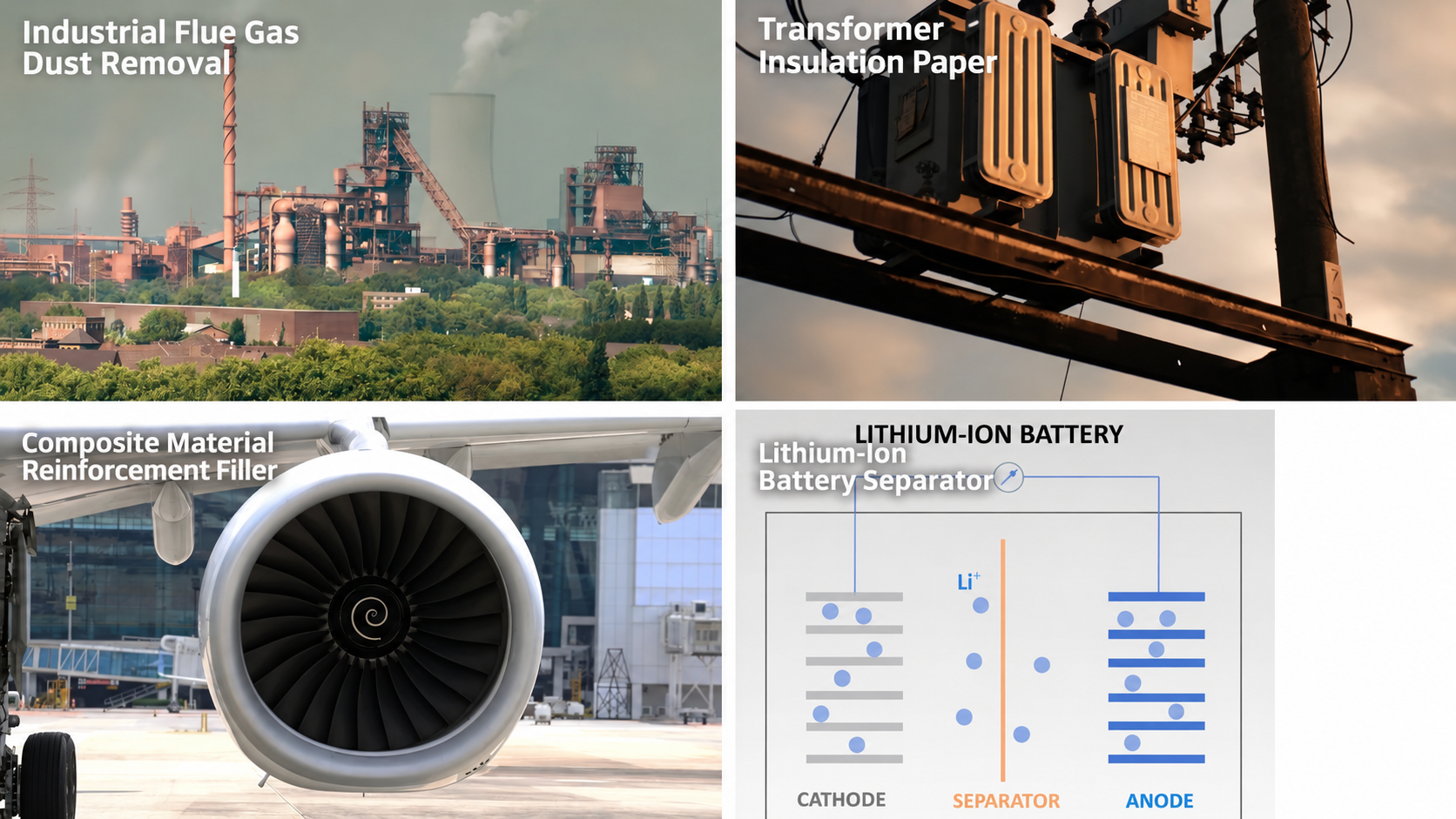
Exhaust gases emitted from industrial chimneys often exceed 200°C—temperatures that standard filter bags cannot withstand. PI staple fibers can be processed into felt-like filter media—where fibers are entangled to form a fabric—and then heat-set at 300°C to ensure dimensional stability. These filter bags are used for dust removal in cement kilns, steel mills, and chemical plants, offering both high-temperature resistance and excellent cost-effectiveness.
(2) High-Grade "Insulating Paper"
Electrical motors and transformers require specialized insulating materials. PI staple fibers can be pulped—much like raw materials used in papermaking—by dispersing them in water along with dispersants and reinforcing agents. This mixture is then processed via a wet-laid papermaking technique to create a base sheet, which is subsequently impregnated with high-temperature resistant resin and hot-pressed to form PI insulating board. This material offers superior heat resistance and electrical insulation, making it ideal for applications such as motor slot insulation and interlayer insulation in transformers. Additionally, PI staple fibers can be blended with plant-based fibers to produce heat-resistant insulating paper at a more controlled cost.
(3) As "Reinforcing Fillers" for Composite Materials
Polyimide (PI) short fibers, cut to lengths of a few millimeters, can be incorporated into plastic, rubber, or resin matrices to serve as reinforcing fillers. The process is straightforward: the fibers are mixed with the matrix material and then shaped via injection molding, compression molding, or extrusion. Such reinforced composites are utilized in applications including aircraft interior components, engine compartment parts, automotive friction pads, and gaskets.
(4) For Specialized "Paper" and Thermal Insulation Layers
PI short fibers can be blended with
aramid pulp or plant fibers and processed using a wet-laid technique—similar to papermaking—to create nanofiber paper. By subsequently coating this paper with PI resin and applying heat and pressure, a flexible PI fiber paper is produced. This material is both heat-resistant and pliable, making it suitable for use as a flame-retardant thermal insulation layer, a specialized packaging material, or a filler for paints. Due to their inherently low thermal conductivity, PI short fibers—whether used alone or in composite form—are also well-suited for thermal insulation applications.
(5) In the Field of New Energy Batteries
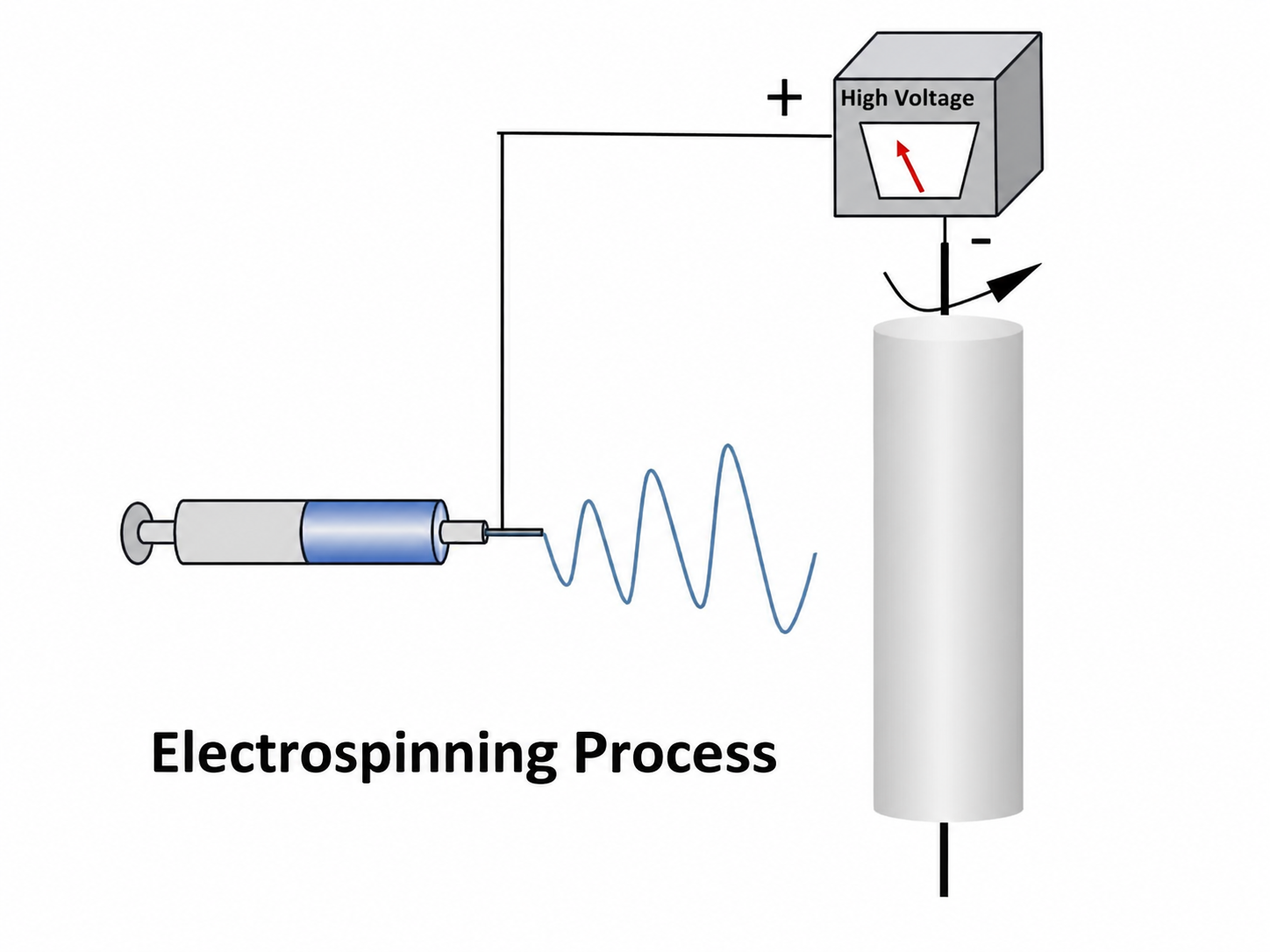
PI nanofiber separators exhibit no dimensional change even at temperatures as high as 300°C, offering thermal stability far superior to that of polyolefin-based separators. In practice, electrospun PI nanofiber membranes can be cut directly into battery separators; when integrated into lithium-ion batteries, they significantly enhance the thermal stability of the cells. Furthermore, PI short fibers can be prepared as a suspension to serve as a functional coating for existing battery separators or as a modifying agent for filtration media.
02. Comparison of PI Short Fiber Preparation Processes: Electrospinning vs. Wet Spinning
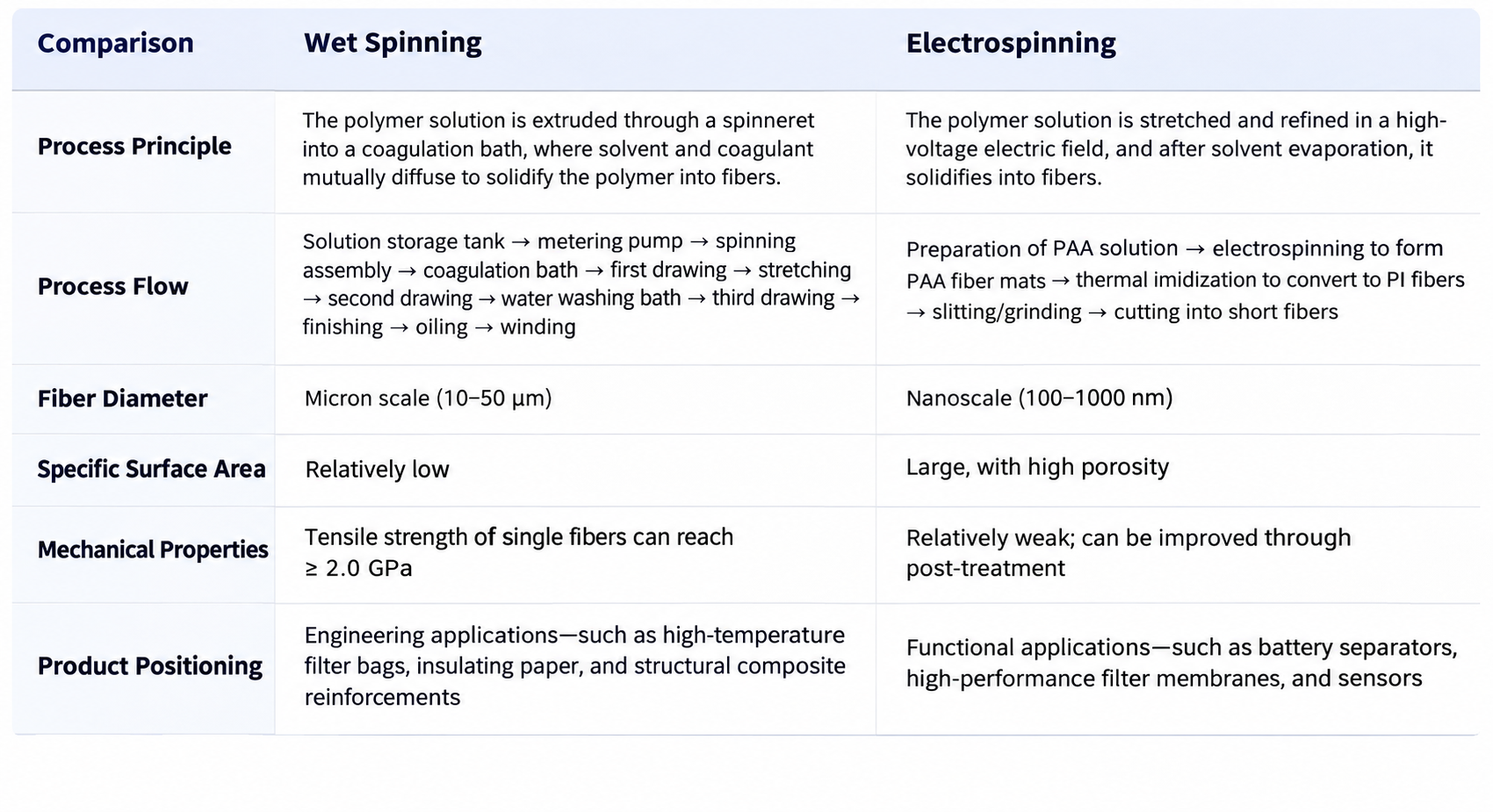
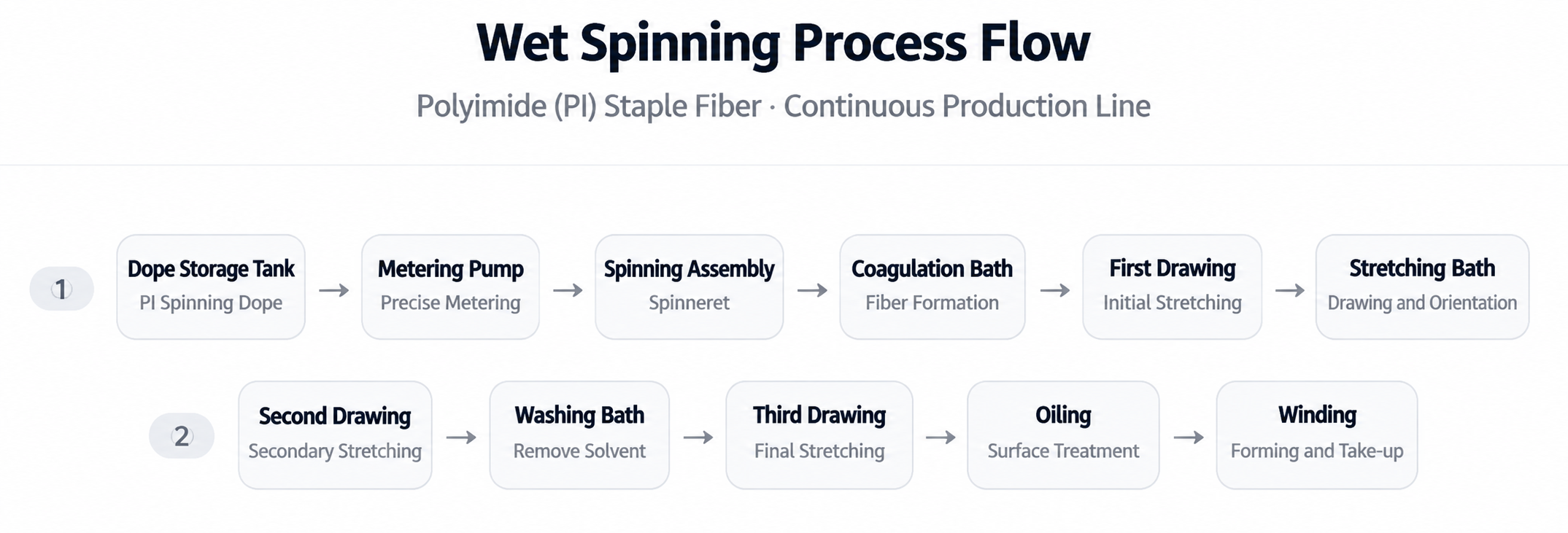
The diverse range of applications imposes varying requirements on the fiber diameter, specific surface area, and mechanical properties of PI short fibers—characteristics that are fundamentally determined by the preparation process. Among current mainstream production techniques, wet spinning and electrospinning represent two distinct technological approaches.
03. Research Progress
The technology for producing PI short fibers is continuously evolving toward greater standardization, enhanced functionality, and higher performance.
Research on electrospun polyimide (PI) fibrous membranes continues to deepen, with applications spanning oil-water separation, air filtration, battery separators, sensors, and thermal insulation materials.
In 2026, a study explored the use of chopped PI fibers to create a homogeneous composite reinforcement for PI foam—incorporating PI short fibers of the same material into the PI foam matrix. This approach enhances interfacial compatibility, resulting in significant improvements to both flexural and compressive strength.
These developments indicate that PI short fibers are rapidly transitioning from fundamental material research toward engineering applications, and their potential in high-end manufacturing warrants continued attention.